


Commercial bakeries face major air quality challenges during every shift. Airborne flour dust, high heat, and excess humidity strain equipment and hurt worker health. Knowing how to improve air quality in bakery environments is no longer just about passing safety checks.
Proper air control directly increases daily output, reduces machinery repairs, and keeps skilled staff on your team. Clean air keeps sensitive equipment running cool while protecting dough from contamination. You can review our comprehensive commercial indoor air quality solutions to modernize your plant layout.
To shield your crew, you need to understand the main airborne hazards in your facility.
Why Learning How to Improve Air Quality in Bakery Facilities Boosts Your Bottom Line
Flour dust quickly fills production zones during mixing, bag tipping, and dough shaping operations. Inhaling microscopic wheat or rye particles poses severe health hazards to your bakery staff. According to the UK Health and Safety Executive, flour dust remains a leading cause of occupational asthma. Known as Baker’s Asthma, this condition forces experienced bakers to leave the trade permanently.
Sensitized employees suffer from persistent coughing, nasal congestion, and severe chest tightness during work. These health problems lead to unexpected sick days, low morale, and dropped hourly production rates. When key staff call out sick, remaining workers must rush to hit daily production targets. Unmanaged dust rapidly turns into lost labor hours and higher overtime expenses.
Controlling airborne dust is also a strict legal duty for modern commercial food plants. Health inspectors actively enforce airborne exposure limits for respirable flour dust hazards. Failing compliance checks brings heavy fines, formal enforcement notices, and increased insurance premiums. Unsafe plant conditions also drive away talent, raising annual recruitment and training budgets.
Dust particles also inflict steady, costly damage on specialized bakery equipment every day. Fine flour settles deep inside proofer sensors, cooling coils, and burner air intakes. This dust layer acts like insulation, forcing drive motors and compressor chillers to overheat. Clogged machines draw extra power, break down without warning, and fail years ahead of schedule.
Understanding how to improve air quality in bakery settings turns basic compliance into measurable financial savings. Effective local exhaust captures dust before it ruins finished batches or settles on floor surfaces. It cuts daily floor sweeping time and extends the life of central air units. Clean indoor air preserves worker health, shrinks maintenance bills, and guards profit margins.
Tracing dust movement makes it far easier to fix air quality issues across your layout.
Mapping the Flour Dust Lifecycle in Commercial Baking
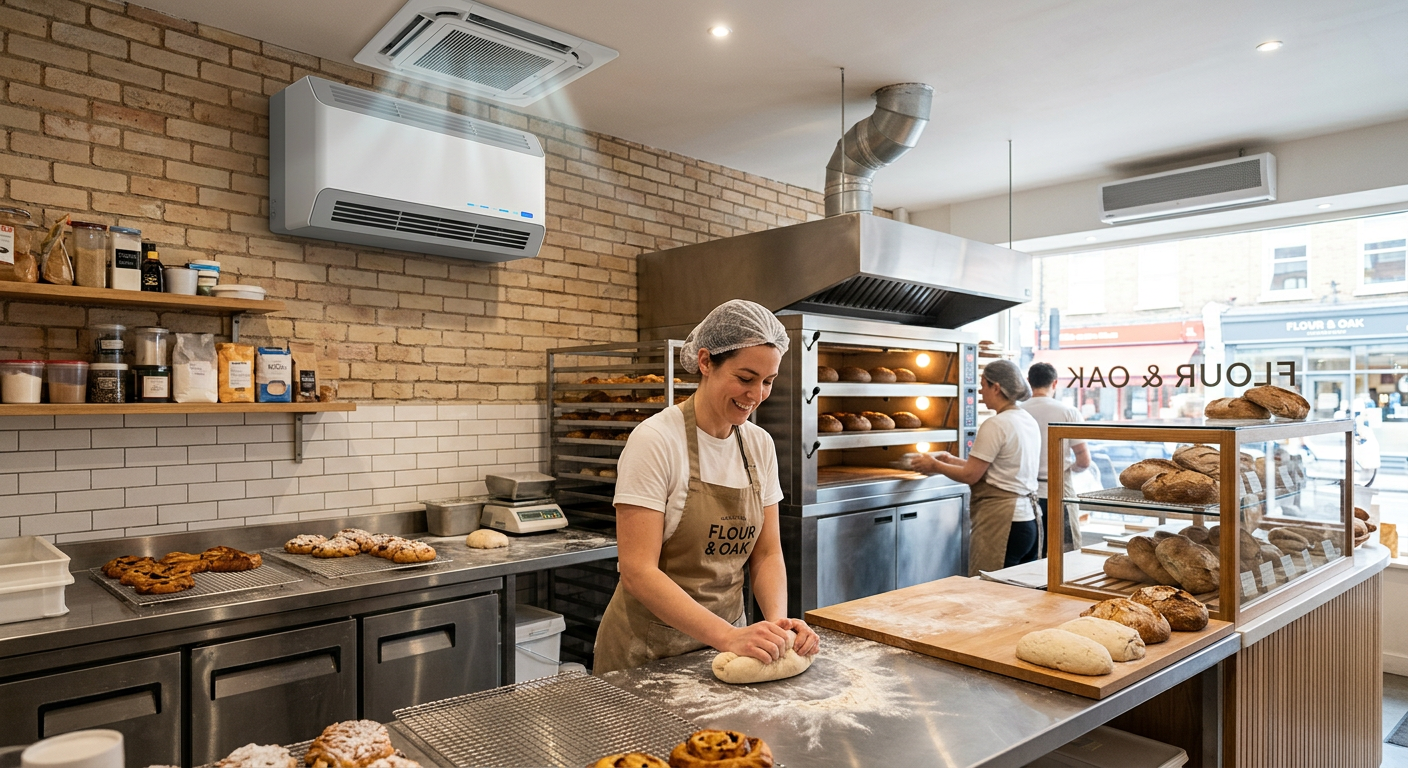
Flour dust enters your facility air long before ingredient hoppers begin to run. The process starts during raw material receiving when workers dump 50-pound bags into hoppers. Pneumatic bulk lines also release large dust plumes if connection seals wear out. Sifting machines then break up raw flour, pushing fine particles straight into open workrooms.
Dough preparation creates the second major wave of fine airborne particles. High-speed spiral mixers throw dry flour upward before water binds the mixture into dough. Workers also throw dusting flour onto bench tables during hand shaping. Industry data shows flour dust concentration routinely spikes above 10 milligrams per cubic meter during mixing.
Finally, improper cleaning habits spread fine dust across every corner of the plant. Dry brooms and air blow guns launch settled flour back into worker breathing zones. Localized exhaust systems on mixers and hoppers offer immediate, targeted dust capture. Stopping dust right at the source keeps ambient air clear and lowers overall filter loads.
Tracking these specific dust points helps managers plan how to improve air quality in bakery facilities efficiently. Containing flour early lets main duct filters operate much longer without clogging.
Once you find these problem spots, you must remove unsafe cleaning habits from daily shifts.
The Cleanup Blind Spot: What Not to Do in a Dusty Bakery
Standard cleaning routines often create severe hidden hazards inside commercial bakeries. Many production teams rely on corn brooms or air hoses to clear flour from mixers and floors. While these methods seem fast, they blast fine dust back into primary worker breathing zones. Floating flour dust stays suspended in workroom air for hours, lowering air clarity and risking employee health.
Safety agencies strongly urge plant managers to ban dry sweeping and air blowing in dusty work areas. These aggressive cleaning methods turn quiet, settled dust back into immediate airborne hazards. When planning how to improve air quality in bakery plants, managers must revise daily cleaning procedures. Replacing old broom routines with modern tools protects your team and maintains low ambient dust readings.
Switching to wet cleaning and specialized vacuuming creates a safer environment for everyone. Use industrial HEPA-filtered vacuum systems to trap fine flour without blowing fine dust out the exhaust port. Follow up with damp microfiber cloths on stainless surfaces to capture lingering dust safely. These simple routine shifts stop dust re-suspension and help main air systems perform at peak capacity.
Beyond manual sanitation routines, smart technology now automates dust management across every shift.
Modern Ventilation Strategy: How to Improve Air Quality in Bakery Spaces with Smart HVAC
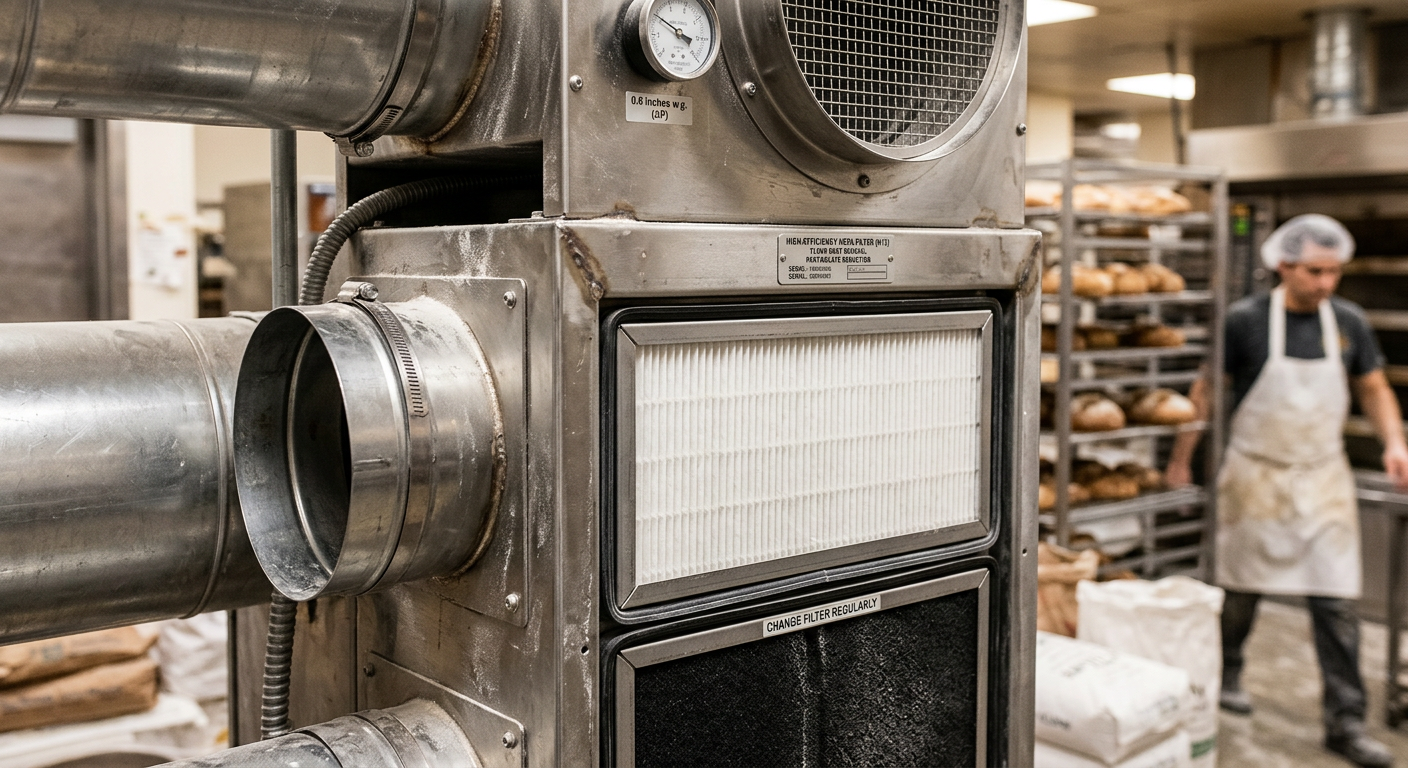
Modern ventilation upgrades do much more than basic wall exhaust fans. Combining source capture hoods with continuous indoor air monitoring creates an automated air management system. Position targeted canopy hoods or side-draft hoods right over high-dust areas. Mixing bays, bag-dump stations, and dough dividers need concentrated air suction to catch dust early.
Installing high-efficiency filters inside main HVAC ducting traps microscopic particles before air recirculates. Standard filtration guidance recommends upgrading duct filters to MERV 16 or H13 HEPA ratings. Modern facility managers often pair these with HEPA H13 air purifiers for large rooms to maintain background air purity. Clean air preserves motor components, prevents duct fire risks, and keeps ambient room air fresh.
Smart ventilation links these filtration units directly to optical laser dust sensors. Place these digital monitoring units near mixing bowls and bulk ingredient storage bins. The sensors track airborne particle levels every second throughout 24-hour production runs. When staff tip flour sacks, sensors pick up dust spikes instantly.
The sensor network sends real-time signals to variable-speed drives on main extraction fans. Integrating specialized 3-phase motor controllers for ventilation allows fans to scale speed precisely based on real-time load. Knowing how to improve air quality in bakery operations requires balancing air purity against high utility bills. Running high-speed fans nonstop wastes expensive heated or chilled air, sending power bills soaring.
Demand-controlled ventilation solves this energy balance by running fans only when needed. Central software logs continuous air data, giving managers clean records for safety audits. Plant leaders can cross-reference air quality reports against baking schedules to optimize fan timing. This automated setup cuts power costs, ensures regulatory compliance, and improves staff retention through better working comfort.
To keep these mechanical systems performing well, staff need a simple daily inspection process.
Operational Checklist: The Daily 5-Minute Air Quality Walkthrough
Facility managers and shift supervisors can protect worker health through quick daily walk-throughs. A five-minute morning check prevents flour dust buildup and keeps extraction systems running reliably.
Follow these five simple steps before starting your daily baking shifts:
- Inspect LEV Hoods: Check hood intakes above mixers and tipping stations. Make sure exhaust fans are spinning and intake screens are free of caked dust.
- Check Filter Gauges: Read pressure differential gauges on dust collector banks. High gauge readings mean filters are clogged and need prompt cleaning or replacement.
- Enforce Wet Sanitation: Check shift floor cleaning routines. Confirm workers use HEPA vacuums or damp mops rather than dry brooms or air hoses.
- Verify Oven Exhaust: Test air draft near oven doors and discharge hoods. Confirm heat, steam, and combustion gases vent cleanly outside the building. Integrating reliable fire safety ventilation switchgear ensures emergency extraction systems remain responsive around high-heat oven zones.
- Inspect Waste Trays: Look at catch pans under mechanical sifters and flour hoppers. Empty full pans early to keep flour from spilling onto floors.
This short daily routine teaches staff how to improve air quality in bakery environments while safeguarding vital machinery.
Along with daily walkthroughs, buying purpose-built air equipment ensures long-term performance.
Recommended Air Quality Equipment for Commercial Bakeries
Commercial bakeries require heavy-duty air control gear designed for high heat and heavy dust loading. Local exhaust ventilation (LEV) hoods capture flour dust directly above mixers, hoppers, and bench tables. Explosion-proof, ATEX-certified dust collectors safely draw flammable flour dust away from work areas. Proper extraction systems cut baker's asthma risks while keeping facility surfaces clean.
Industrial air purifiers fitted with multi-stage HEPA filters capture tiny dust particles that escape capture hoods. Suspended ceiling units and high-capacity, low noise air purifiers filter room air across active baking and packing lines without introducing excessive noise to the workspace. Meanwhile, balanced mechanical air handlers exhaust heavy steam and heat from tunnel ovens. This exhaust action prevents moisture buildup, stops mold growth, and protects ceiling structures from corrosion.
Mastering how to improve air quality in bakery facilities protects worker health while maintaining strict safety compliance. Effective flour dust control improves line safety, protects expensive machinery, and cuts daily maintenance costs. Upgrading your commercial air extraction and filtration setup is a proven investment in long-term facility output. Discover more practical tips in our complete guide to commercial climate control and indoor air quality.
Frequently Asked Questions
What baking operations generate the most airborne flour dust?
Flour dust quickly accumulates during ingredient receiving, bag dumping, pneumatic bulk line operations, and sifting. High-speed spiral mixers throw dry flour into the air before water binds it into dough, and workers create additional airborne dust when throwing dusting flour onto bench tables during hand shaping.
Why should commercial bakeries avoid dry sweeping and air blowing for cleanups?
Dry sweeping and compressed air blow guns blast settled flour back into worker breathing zones, suspended in the air for hours. Instead, use industrial HEPA-filtered vacuum systems to trap fine flour without exhausting dust, followed by damp microfiber cloths to safely capture lingering particles.
How does unmanaged flour dust affect commercial bakery equipment?
Elevated flour dust levels force drive motors and compressor chillers to overheat as fine particles settle in proofer sensors, cooling coils, and burner intakes. Clogged machinery draws extra power, breaks down unexpectedly, and fails prematurely, which drives up maintenance costs and lowers overall production output.
What ventilation strategies best control flour dust in a bakery?
Upgrade main HVAC ducting filters to MERV 16 or H13 HEPA ratings. Pair source-capture hoods over high-dust areas with smart demand-controlled ventilation that uses optical laser dust sensors and 3-phase motor controllers to automatically adjust fan speed based on real-time dust levels.
About This Article
Editorial Disclosure: This article was researched and written by our content team to provide helpful, accurate information about how to improve air quality in bakery. We regularly review and update our content to reflect the latest industry developments and best practices.
