


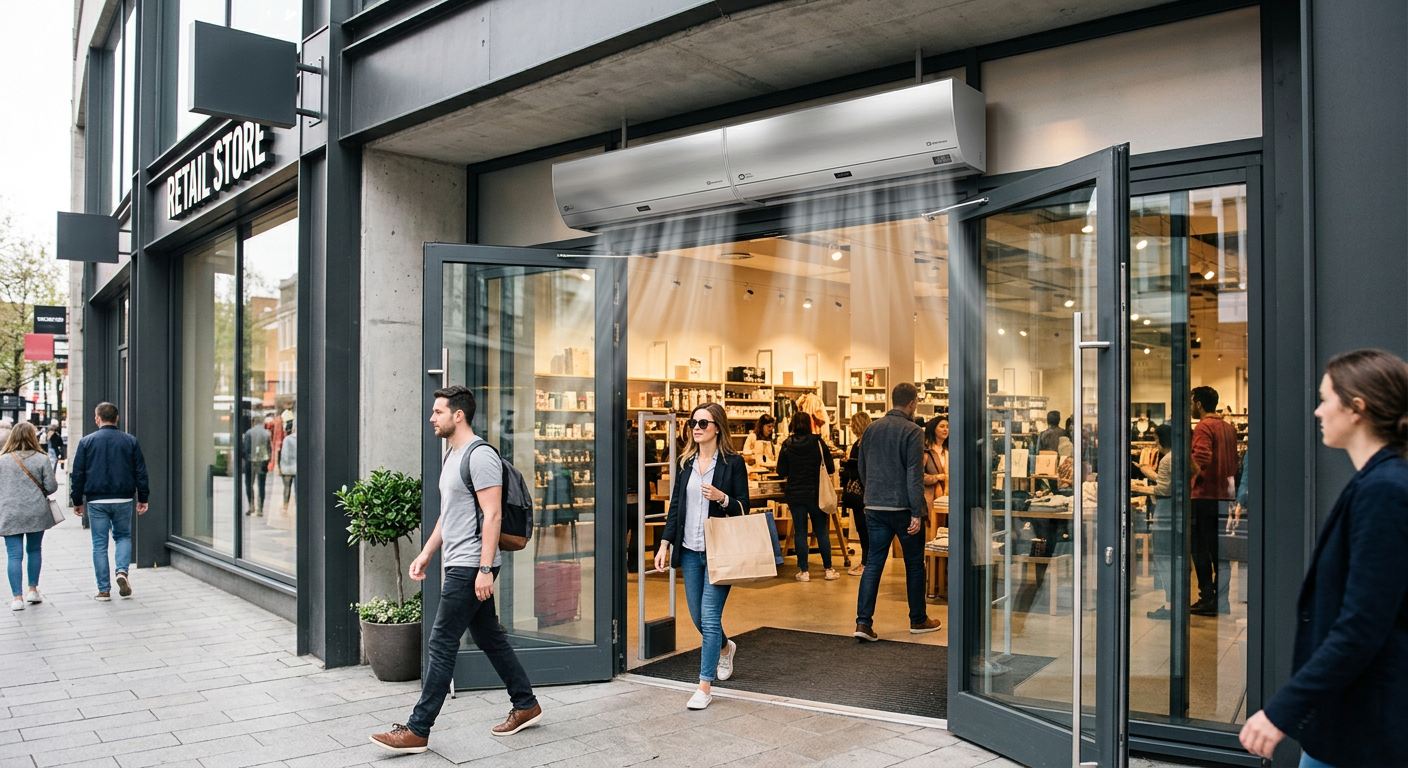
An open front door invites shoppers directly into your store. But open doorways lose valuable heated or cooled air fast. Installing an air curtain for retail entrance doors solves this costly climate problem without shutting out customers.
These systems create a continuous wall of air across the opening. They protect your indoor climate and trim energy bills. Paired with proper heating equipment, an air barrier maintains stable indoor temperatures all year. Investing in the right unit, such as a high-performance Frico air curtain, protects your staff, improves customer comfort, and boosts store profits.
Why UK Retailers Are Investing in an Air Curtain for Retail Entrance Doors
High street shops face constant pressure to bring in foot traffic and hit sales targets. An open entrance encourages passersby to step inside without thinking twice. Closed glass doors create a subtle barrier for buyers. Carbon Trust data suggests keeping doors open can boost walk-ins by 10% to 15%.
But leaving doors wide open creates major heating problems. UK weather brings cold drafts, damp air, and street fumes straight into the shop. An air curtain for retail entrance setups fixes this exact issue. It blows a steady stream of air across the doorway to keep bad weather outside. For smaller boutiques, installing a compact 230V air curtain offers an ideal solution without requiring major electrical overhauls.
Energy bills are a massive expense for commercial properties across the UK. Leaving an unprotected doorway open forces heating systems to run flat out. Warm air escapes quickly while winter air rushes across the shop floor. Carbon Trust reports show heat lost through open doors inflates heating bills by up to 30%.
Installing a commercial air curtain seals the doorway with air. This barrier stops rapid heat loss and cuts the load on your main heating system. Lower energy use drops your monthly bills. Over time, those fuel savings pay off the upfront unit costs.
Indoor air quality directly impacts how long people browse your store. Staff working near cash desks or front displays take the brunt of cold gusts. Exposure to constant drafts ruins staff comfort and drives up winter sick days. A steady air curtain keeps temperatures comfortable right up to the threshold.
The benefits extend into summer too. Ambient air curtains keep air-conditioned cool air inside the shop. They also block flies, street dust, and exhaust fumes from getting inside. With energy savings and higher foot traffic, most UK store owners hit full ROI within 12 to 24 months.
Key Types of Air Curtains for Retail Entrances: From Design to Smart Controls
Retail doorways vary by building style and floor space. High-street boutiques often choose recessed models hidden in ceiling voids. These units stay out of sight while protecting the shop floor. Custom finishes like brushed stainless steel match high-end interior decor.
Enclosed mall shopfronts face lighter wind and work well with surface-mounted units. Precise sizing determines overall performance no matter the location. The air stream must cover the full door width with zero gaps. If the barrier is slightly too narrow, cold air leaks inside instantly.
Door height determines the air speed needed for full protection. Taller entrance doors require stronger fan motors to push air down to the floor. Blower systems must generate smooth, laminar airflow. Turbulent air breaks apart early, wasting power and letting cold drafts inside.
Adjustable discharge louvres let installers angle air slightly outward toward the street. This outward push resists wind pressure and keeps the barrier intact. Modern smart controls add automated options. Micro-switch door sensors boost fan speed when doors open and lower it when they close.
Advanced models connect directly to Building Management Systems. This lets site managers track power use across multiple shop locations. Guidance from CIBSE shows automated fan controls reduce entrance heat loss by up to 70%. Retailers can choose electric elements, hot water coils, or an unheated 1200mm air curtain for ambient protection.
Total Cost of Ownership: Installation, Maintenance, and Energy ROI
Buying an air curtain involves more than the sticker price. Commercial units cost between £400 and £1,500 depending on width and heating type. Installation adds to this starting figure. Electricians need to check your main power supply, as heated models require dedicated circuits.
Ambient units use basic wiring, but heavy-duty electric models require higher power lines. Mounting brackets and door sensors also add to labor costs. Fitting a standard shopfront unit takes two to four hours. Expect installation labor to add £200 to £500 to your budget.
Routine upkeep stays simple and cheap for store teams. Dust on intake grilles restricts airflow and lowers unit output. Staff should wipe intake grilles weekly and clean mesh filters monthly. Clean filters keep power draw low and stop motor strain.
Units with sealed bearings require no motor lubrication. However, annual checks ensure electrical wiring remains safe and heating elements run smoothly. Upkeep costs stay under £100 per year for most store owners. Simple maintenance helps quality equipment last well over ten years.
The energy savings offset these costs fast. Open doors welcome shoppers, but bare doorways waste expensive heating. A proper air barrier retains up to 80% of conditioned air. UK Carbon Trust data shows controlling door drafts reduces total heating costs by up to 15%.
Most high-street shops pay off their total investment within 12 to 24 months. Beyond lower utility bills, air curtains protect main HVAC equipment. Reduced runtime puts less strain on heat pumps and boilers. That prevents expensive repairs while keeping your doors open to buyers.
Recommended Air Curtains for High-Traffic Commercial Spaces
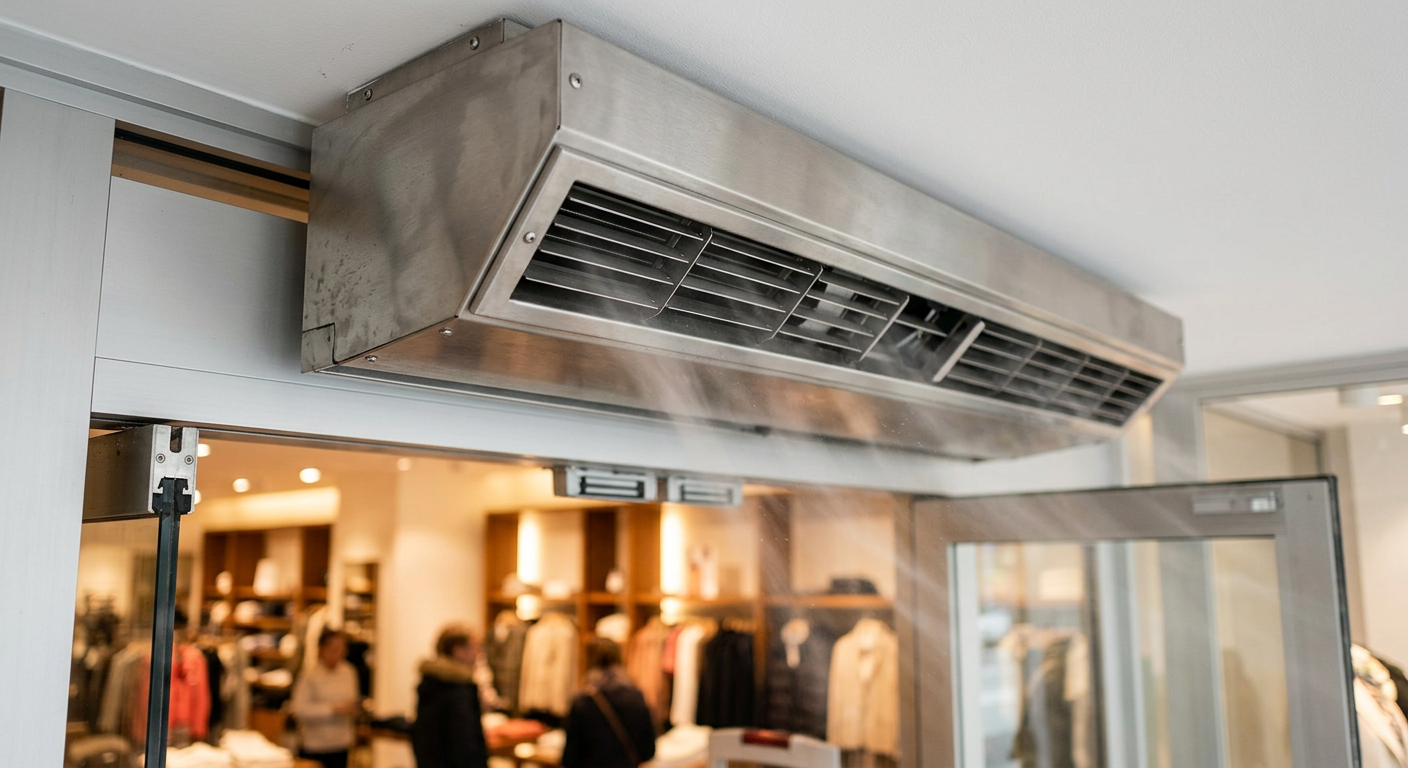
High-traffic store doorways need robust barrier systems to handle non-stop foot traffic. Heavy-duty electric air curtains work great for entrances up to three meters high. High-speed fans block cold gusts immediately. Heating elements add immediate warmth for entering customers, while smart thermostats keep daily power use low.
For stores with central heating boilers, Low Pressure Hot Water (LPHW) air curtains deliver strong long-term savings. BSRIA data shows water-fed coils lower carbon emissions compared to direct electric heating. LPHW units link to existing hot water pipes to provide steady heating across wide shop doors. They handle thousands of daily customer passes without losing internal warmth.
Recessed air curtains suit high-end store entrances where visual appeal matters. These units sit inside suspended ceilings above double doors. Centrifugal fans project a steady wall of air downward without cluttering the entrance space. Correct nozzle sizing prevents outdoor winds from breaching the thermal barrier.
Custom setups fit specialized retail layouts. Drive-thru windows, storage areas, and walk-in freezers often require specialized solutions like a dedicated cold store air barrier door to prevent temperature transfer. Mounting units vertically beside door frames protects extra-tall openings where ceiling mounts cannot work. These flexible setups ensure every store layout stays warm and energy efficient.
Maximising Storefront Efficiency
Fitting an air curtain for retail entrance doorways turns an energy loss into long-term savings. It lets you keep front doors open to welcome shoppers. At the same time, it seals conditioned air inside your shop. Retailers often see lower utility bills within their first year of operation. The invisible barrier also keeps out street dust, car exhaust, and pests.
Choosing the right system depends on door height, doorway width, and local wind exposure. Heated models offer a warm welcome during winter, while ambient units cut cooling costs in summer. Proper air volume and stream angle ensure full doorway protection without blasting customers.
Upgrading your shopfront is a practical step toward smart climate control. Pairing air barriers with energy-efficient space heaters and ventilation systems maximizes overall operational savings. Explore our range of commercial climate control solutions to build an efficient system for your store.
Frequently Asked Questions
How does an air curtain affect retail foot traffic?
Keeping doors open can increase walk in foot traffic by 10 percent to 15 percent according to Carbon Trust data. An air curtain allows high street stores to welcome customers through an open door while maintaining a protective air barrier.
How much money can an air curtain save on energy bills?
Carbon Trust reports show heat lost through open doors inflates heating bills by up to 30 percent. Installing an air curtain retains up to 80 percent of conditioned air and can reduce total heating costs by up to 15 percent.
How much does a commercial air curtain cost to buy and install?
Commercial units cost between 400 pounds and 1,500 pounds depending on width and heating type. Installation labor adds 200 pounds to 500 pounds to the budget, taking between two and four hours to complete.
What is the typical ROI period for a retail air curtain?
Most high street store owners achieve full return on investment within 12 to 24 months. These savings come from lower energy utility bills and reduced strain on the main heating system.
About This Article
Editorial Disclosure: This article was researched and written by our content team to provide helpful, accurate information about air curtain for retail entrance. We regularly review and update our content to reflect the latest industry developments and best practices.
